Allport Cargo Services is now part of the DP World global network.
Discover what this means for your supply chain.
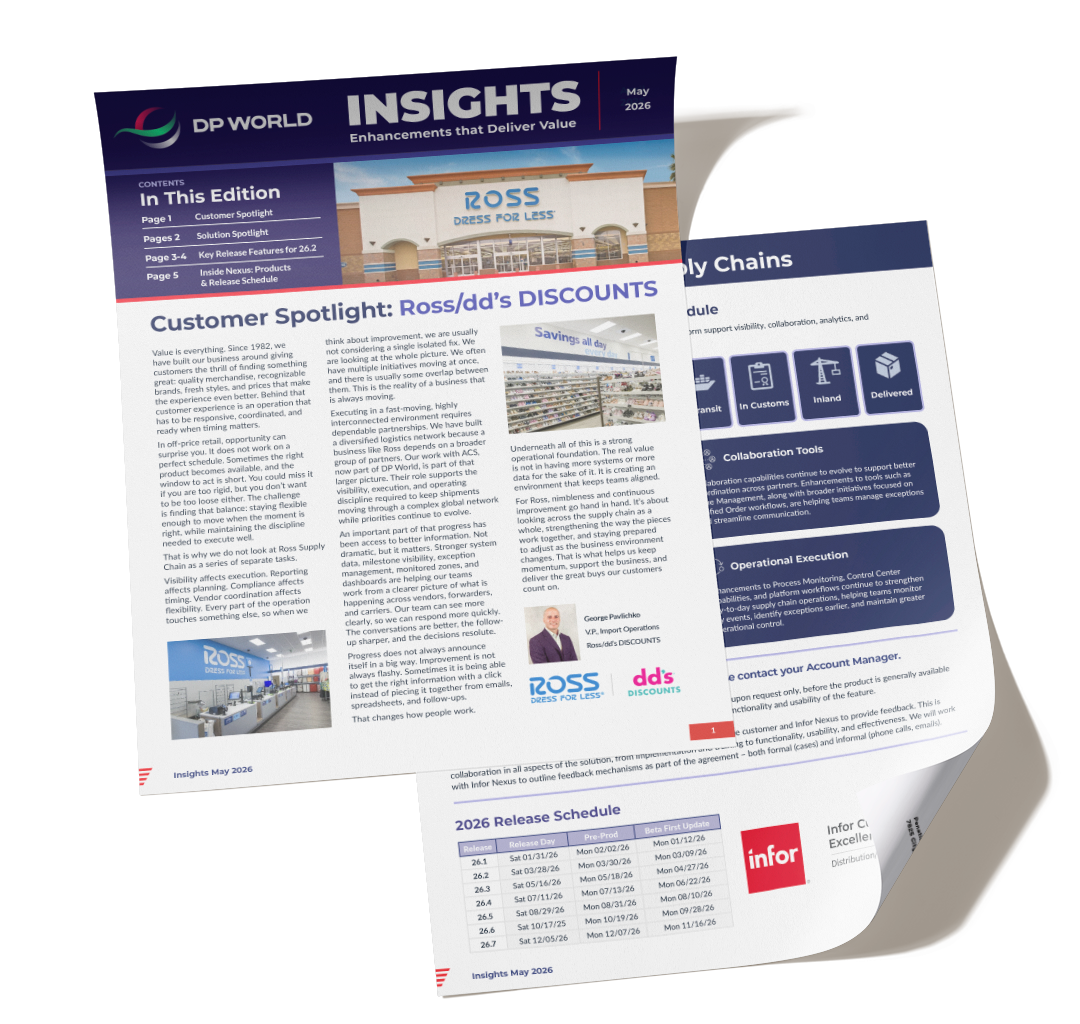
Learn MoreValue is everything. Since 1982, Ross has built its business around delivering quality merchandise, recognizable brands, fresh styles, and compelling prices. Behind that experience is an operation that must stay responsive, coordinated, and ready when timing matters.
In off-price retail, opportunity does not follow a perfect schedule. The right product can appear quickly, and the window to act is often short. As a result, the challenge becomes finding the right balance between flexibility and discipline, moving when the moment is right while maintaining the structure needed to execute consistently.
With that in mind, Ross does not view its supply chain as a series of separate tasks. Instead, each function influences the next. Visibility affects execution, reporting shapes planning, compliance impacts timing, and vendor coordination drives flexibility.
Because of this interconnected environment, improvement is rarely about a single isolated fix. Rather, it requires looking at the full picture, often with multiple initiatives progressing at the same time.
Executing in this environment requires dependable partnerships. To support this level of coordination, Ross has built a diversified logistics network that allows the business to remain both flexible and controlled as conditions shift.
Their work with ACS, now part of DP World, is part of that broader network. The partnership supports visibility, execution, and operating discipline, helping shipments move efficiently through a complex global environment while priorities continue to evolve.
As this network has developed, access to stronger, more reliable information has become an important driver of progress. Enhanced system data, milestone visibility, exception management, monitored zones, and dashboards are giving teams a clearer understanding of activity across vendors, forwarders, and carriers.
With that clarity, teams are able to respond more quickly and with greater confidence. Conversations become more informed, follow-up more precise, and decision-making more decisive.
At the same time, progress does not always present itself in obvious ways. In many cases, improvement comes from simplifying how information is accessed, allowing teams to move from piecing together updates across emails and spreadsheets to working from a single, reliable view.
Over time, that shift changes how people work and how effectively teams stay aligned.
Ultimately, for Ross, nimbleness and continuous improvement go hand in hand. By continuously strengthening how each part of the supply chain works together, the business is better positioned to adapt, maintain momentum, and deliver the value their customers expect.
Get the latest insights from Allport Cargo Services.
